
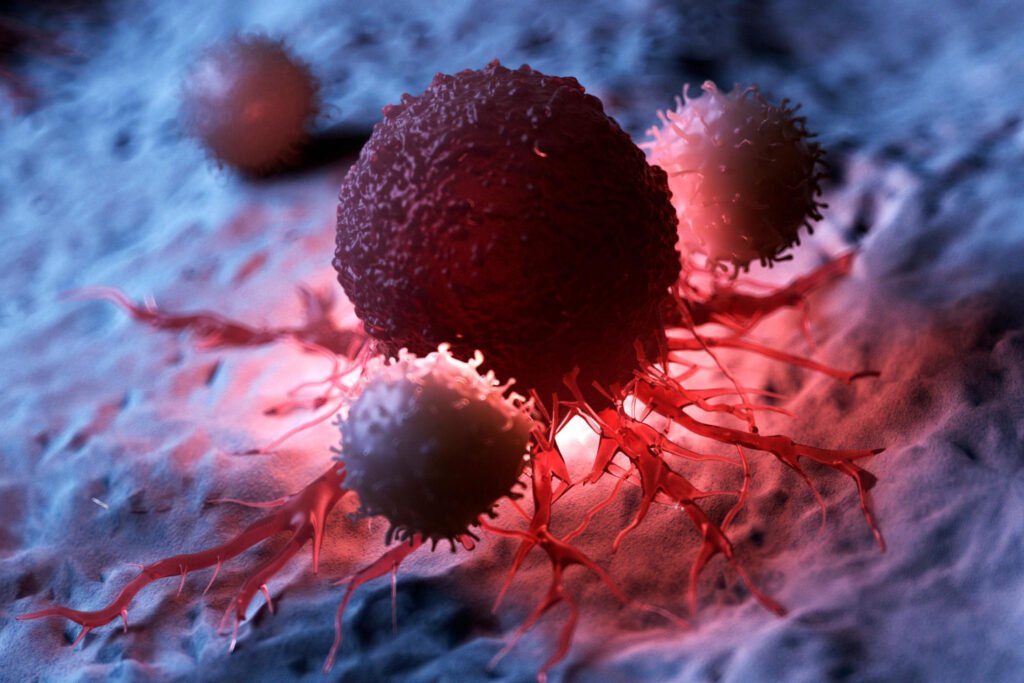
Understanding Types of Cancer
Cancer grows without rules, refuses to die, destroys vital organs one by one, and spreads through the bloodstream like a parasitic network eroding human life from within.
Pancreatic cancer is often called one of the deadliest cancers and is dubbed the “silent killer” because symptoms only appear after the tumor has spread to other organs. Additionally, certain brain cancers, such as glioblastoma, are extremely dangerous due to their aggressive nature, rapid growth in a vital organ, and the difficulty of reaching them with standard treatment, leaving patients with a very short life expectancy.
1. How Cancer Develops
Our bodies are made up of trillions of cells. These cells grow, divide, and die in an orderly cycle regulated by the DNA genetic code within the body.
Cancer begins when a genetic mutation or damage occurs in a cell’s DNA. This damage can be triggered by various factors, ranging from exposure to harmful chemicals and radiation to infections and aging.
As a result of this mutation, cells lose control:
- Cells that should normally die instead continue to divide massively.
- This uncontrolled cell growth accumulates to form a malignant tumor.
- In certain cases, such as blood cancer (leukemia), abnormal cells circulate freely without forming a solid tumor.
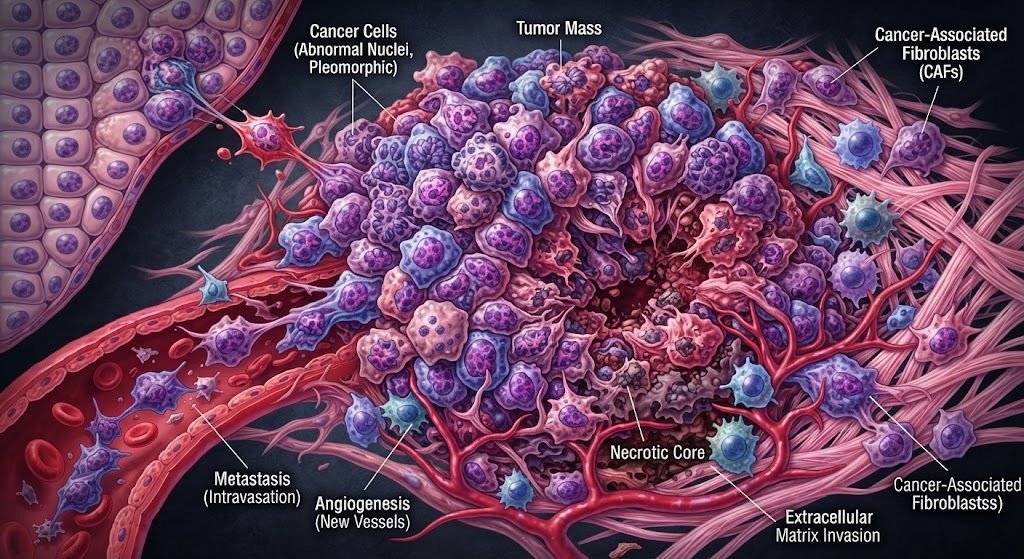
Over time, these cancer cells can spread to other tissues or organs through the bloodstream or lymphatic system. This spreading process is known as metastasis.
2. Types of Cancer
The medical world classifies cancer based on the type of cell where the cancer originates. Here are the main types:
A. Carcinomas (Cancer of the Skin and Organ Linings)
This is the most common type of cancer, accounting for the vast majority of human cancer cases. It attacks the epithelial tissue that lines the outer surface of the body as well as internal organs.
- Breast Cancer: The growth of malignant cells in the breast glandular tissue, influenced by genetic factors, hormones, and lifestyle.
- Lung Cancer: Closely linked to smoking habits or long-term exposure to air pollution.
- Colorectal Cancer: Originates from benign polyps in the colon that mutate over time.
- Skin Cancer: Damage to skin cells caused by excessive exposure to ultraviolet (UV) sunlight.
B. Sarcomas (Cancer of Bones and Connective Tissues)
Sarcomas attack the body’s supporting tissues, such as bones, muscle, fat, and blood vessels.
- Osteosarcoma: Bone cancer that frequently affects children or young adults, typically around the knee or arm areas.
- Soft Tissue Sarcoma: Develops in the muscles or fatty tissues of the body.
C. Leukemia (Blood Cancer)
Unlike other types, leukemia does not form solid tumors. This cancer attacks the bone marrow, where blood cells are produced. The bone marrow produces abnormal white blood cells in large quantities, crowding out healthy blood cells.
D. Lymphoma and Myeloma (Immune System Cancers)
- Lymphoma: Cancer that affects the lymph nodes, causing white blood cells (lymphocytes) to grow out of control.
- Multiple Myeloma: Cancer that affects plasma cells in the bone marrow, accumulating and impairing the body’s immune function.
3. What Triggers Cancer?
Cancer does not happen instantly; rather, it is the result of long-term accumulation. Some of the main factors include:
- Genetics (Heredity): Inherited gene mutations passed down from parents (such as BRCA in breast cancer).
- Age: The risk of cell mutations increases with advancing age.
- Lifestyle & Environment: Smoking, obesity, excessive alcohol consumption, physical inactivity, and exposure to toxic chemicals.
- Viral/Bacterial Infections: For example, the HPV virus, which triggers cervical cancer, or Hepatitis B/C affecting the liver.
4. New Hopes Through Modern Therapies:
In the past, cancer treatment relied solely on surgery, chemotherapy, and radiation, which often took a heavy toll on healthy cells.
Today, medicine and biotechnology are rapidly evolving with much more sophisticated and precise methods:
- Immunotherapy: Harnessing the patient’s own immune system to fight off cancer cells.
- Targeted Therapy: Modern drugs that specifically attack specialized proteins inside cancer cells without damaging healthy tissue.
- Natural Supportive Approaches: The application of modern technology to natural active ingredients (such as nano propolis) is also widely researched as a supportive therapy to help reduce chronic inflammation and maintain cellular health.
With early detection, a healthy lifestyle, and advances in medical technology, the threat of these malignant cells can be fought and controlled much more effectively.
Scientific References
- Banskota, A. H., et al. (2001). “Antiproliferative activity of constituents of Brazilian propolis against human cancer cell lines.” Biological and Pharmaceutical Bulletin, 24(9), 1017-1021.
- Galeotti, N., et al. (2018). “Caffeic acid phenethyl ester: A novel approach to cancer treatment through apoptosis induction and angiogenesis inhibition.” Molecular Medicine Reports, 17(4), 5035-5041.
- Coussens, L. M., & Werb, Z. (2002). “Inflammation and cancer.” Nature, 420(6917), 860-867.
- Natarajan, K., et al. (1996). “Caffeic acid phenethyl ester is a potent and specific inhibitor of activation of nuclear factor kappa B.” Proceedings of the National Academy of Sciences (PNAS), 93(16), 9090-9095.

